The History of Christmas Lights: From Candles to LEDs
Updated: Oct 1
Where It All Started...
Christmas lights have been part of my Christmas for as long as I can remember.
I started decorating when I was a kid as part of our family's Christmas traditions. That stayed with me through the years. Even while I was a student living in an apartment in Canada, I always found a way to put up Christmas lights.
Years later, something I simply enjoyed doing grew, almost by accident, into A Lit Noël. We started small, helping people who loved Christmas lights but didn't necessarily want to deal with ladders, cold weather, or the time it takes to put everything together.
What kept us going was seeing people's reactions, especially when the lights came on for the first time.
So, for our first article, I thought it would be fun to go back even further and explore the history of Christmas lights.
Where did Christmas lights actually come from?
The History of Christmas Lights Started With Candles
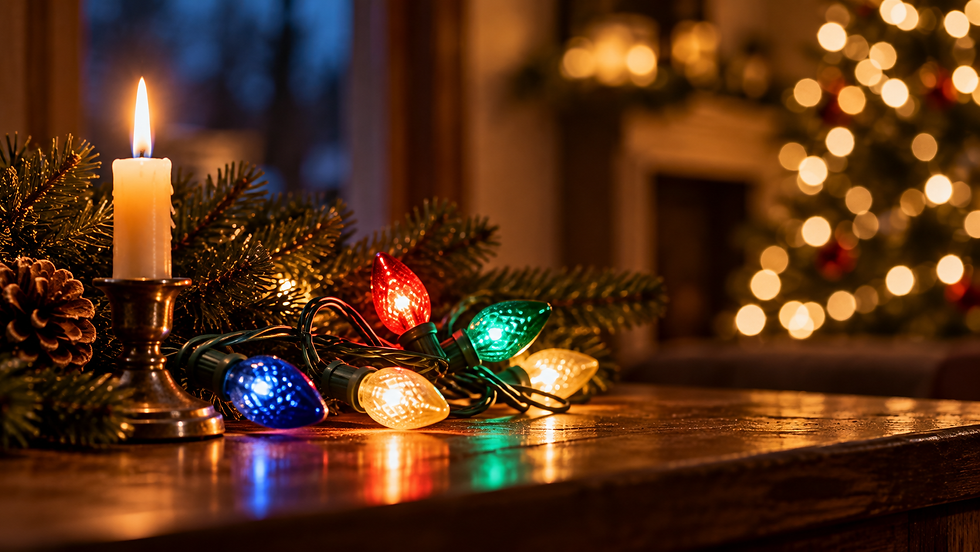
Long before anyone could plug Christmas lights into an outlet, people used real candles to illuminate Christmas trees.
The tradition is commonly associated with Germany. Small candles were attached to tree branches, creating the warm glow people wanted in the middle of winter.
Beautiful? Absolutely.
Safe? Not exactly.
Open flames on a tree were a serious fire risk. Families had to watch their trees carefully and could only enjoy the candles for short periods.
Something safer was needed.
Then Came Electricity
That change started in the late 1800s.
In 1880, Thomas Edison displayed electric lights outside his laboratory in Menlo Park, New Jersey.
Two years later, his associate Edward H. Johnson did something special for Christmas. He hand-wired 80 red, white, and blue bulbs around a Christmas tree in his New York home.
The tree even rotated!
It is widely recognized as the first electrically illuminated Christmas tree.
Imagine seeing that in 1882, when electric lighting itself was still new. It must have looked incredible.
Christmas Lights Come Home
At first, electric Christmas lights were expensive and difficult to install, so they weren't something every family could have.
That gradually changed.
In 1903, General Electric began offering preassembled Christmas-light sets, making electric lighting far more practical.
As electricity became more common and lights became more affordable, the tradition grew.
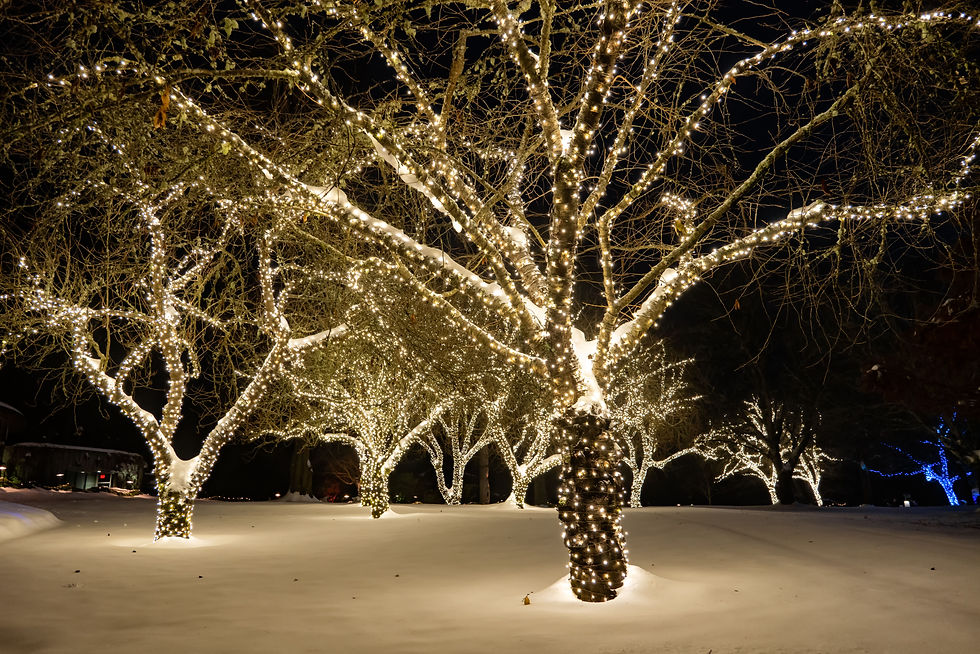
Lights eventually moved beyond the indoor Christmas tree and onto homes, storefronts, trees, porches, and landscaping.
Holiday lighting was becoming something the whole neighborhood could enjoy.
From Big Bulbs to Mini Lights and LEDs
Christmas lights continued to change over the decades.
Big, colorful bulbs lit up rooflines for years. Then smaller mini lights made it possible to wrap trees, shrubs, wreaths, garlands, and other decorations with hundreds of tiny lights.
Then came LEDs.
LED Christmas lights use less electricity, produce less heat, and generally last longer than traditional incandescent bulbs. Today, they come in countless colors, shapes, sizes, and styles.
We can create colorful displays, wrap entire trees in mini lights, outline architectural features, or keep things beautifully simple with one of my favorites:
A clean, warm-white roofline.
The Technology Changed. The Feeling Didn't.
We've come a long way from putting candles on Christmas trees.
But I don't think the reason we decorate has changed very much.
Christmas lights still make homes feel warmer. They make children stop and look. They bring neighbors outside.
And sometimes, after a long year, they give us a reason to slow down for a moment and simply enjoy the season.
At A Lit Noël, seeing a finished installation is great. But seeing the smiles when the lights come on is even better.
From candles, to electric bulbs, to LEDs, the technology keeps changing. The Christmas spirit behind the lights keeps shining.
Ready to Light Up Your Christmas?
Let A Lit Noël handle the lights while you enjoy the season.
GET MY FREE ESTIMATE